
Articles Posted in Assisted Living Facilities

A few days ago, Los Angeles’ local ABC 10 News released an article about the Ensign Group’s agreement to a $48 million settlement related to claims of Medicare billing fraud at six nursing facilities in Southern California. And the Medicare fraud wasn’t the worst of it. According to the article, “the lawsuit also claimed some patients were kept in the nursing homes longer than was necessary.” Indeed, the story quickly became national news, as Market Watch from the Wall Street Journal reported on the pricey settlement brought about by the qui tam (or whistleblower) lawsuit.

Cash%20Stack%20Credit.jpgNursing home abuse has been in the spotlight in California over the last couple of months, and as a result, this news might not come as much of a surprise. But it does emphasize that, even though California elder advocates are creating substantial awareness campaigns, nursing home neglect and abuse continues to occur in our state. Do you have an elderly parent or loved one who currently resides in a nursing home or assisted-living facility? It’s important to make sure that your loved one receives the care she or he needs. If you suspect your older parent has been the victim of nursing home abuse, it’s important to contact an experienced California elder law attorney. The dedicated nursing home abuse lawyers at the Walton Law Firm have been handling these cases for years and can discuss your claim with you today.

Details of the Ensign Group’s Medicare Fraud

Assisted living facilities are licensed as Residential Care Facilities for the Elderly, and are generally thought of as living environments for people who need help with one or more activities of daily living, but are otherwise pretty healthy. In fact, the regulations covering RCFEs are designed with this in mind. Under the law, RCFEs are considered non-medical facilities, and are designed to serve people 60 years of age and older by providing room, meals, supervision, housekeeping, distribution of medications, and, if needed, assistance with hygiene, dressing, eating, bathing and transferring.

assisted-living-facilities-800x800.jpgSince they are considered “non-medical,” these assisted living facilities may not admit people with certain “prohibited conditions.” Some of those conditions include Stage 3 and 4 pressure ulcers (bed sores), gastrostomy tubes, serious infections, naso-gastric tubes, and the need to depend on others to perform all activities of daily living.

RCFEs may admit persons with certain “restricted conditions,” such as persons on oxygen, with catheters or colostomy bags, diabetics, or people with incontinence or small wounds, but only if certain other conditions are met. In short, RCFEs or assisted living facilities are not for sick people.

Does your elderly parent have dementia? Many California residents live with dementia, and their children and family members worry about what kind of care is best for a dementia patient. A recent article in U-T San Diego explained the different options for dementia care. According to Dr. Diane Darby Beach, the Director of Education and Outreach for the Vista Gardens Memory Care Community, there are basically three different kinds of providers who offer long-term care to patients suffering from Alzheimer’s and other forms of dementia: home care, assisted living, and adult day care.

Dementia%20Woman%20Credit.jpgAre some of these options better than others? Depending on your unique situation, there are many factors to consider when deciding what kind of care is best for someone who suffers from dementia. If you have questions or concerns about the level of care your elderly loved one has received or is currently receiving, it’s a good idea to contact an experienced California nursing home abuse lawyer. At the Walton Law Firm, we have years of experience dealing with elder law issues and can answer your questions today.

Options for Dementia Care

Over the past few weeks, nursing home abuse and neglect in California has made local and national news. These stories beg the question: are assisted living facilities safe in California? Elder advocates might argue that reforms are in the works, but facilities across the state continue to receive fines and citations. A number of reports related to nursing home abuse and neglect have appeared in U-T San Diego in September. In response to those features, an article written by the president of the California Assisted Living Association (CALA) emphasized the “compassionate, competent care” that many elderly persons do receive in assisted living homes.

Smiling%20Old%20Man%20Credit.jpgWhile many assisted living facilities in California may be providing appropriate care and abiding by the law, many of these homes continue to expose their residents to serious cases of abuse and neglect. If you have an elderly loved one who resides in a nursing facility, it’s important to make sure that your loved one receives the best care possible. If you’re concerned about nursing home abuse or neglect, don’t hesitate to contact an experienced nursing home abuse attorney today.
Do Most Assisted Living Facilities Get it Right?

With investigative help from UT San Diego, the Center for Health Reporting of the California HealthCare Foundation (CHCF) conducted a study of nursing home deaths and nursing home abuse in San Diego County. Early this month, UT San Diego reported the shocking system failures when it comes to assisted living care in our state.

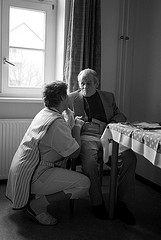
Old%20Man%20and%20Woman.jpg

Looking at the statistics from assisted living homes is an eye opener. Since 2008 alone, “at least 27 San Diego County seniors have died from injuries and neglect suffered in the facilities,” according to UT San Diego. These institutions are responsible for “ensuring that seniors can live in affordable, homelike settings rather than in expensive, institutional nursing facilities,” said UT San Diego.

If you have an elderly parent who currently resides in an assisted living facility or nursing home, you want to make sure that they’re receiving the best possible care. If you suspect that your loved one may be experiencing nursing home abuse and neglect, it’s never too early to contact an experienced elder justice advocate. The attorneys at the Walton Law Firm can answer your questions today.

In mid-August, Families for Better Care released its first “Nursing Home Report Card,” which is part of a “project that analyzes, compares, and ranks states’ nursing home quality.” On the California report card, our state only earned a “C” grade, coming in at 28th place in the United States. In fact, the report card stated that “rampant problems plague California nursing homes as 9 out of 10 facilities cited a deficiency.”

What is Families for Better Care? According to its website, Families for Better Care is “a nonprofit citizen advocacy group dedicated to creating public awareness of the conditions in our nation’s nursing home and other long-term care setting and developing effective solutions for improving quality of life and care.” The non-profit group is located in Florida, but its aim is to expose and improve nursing care across the country.

When Families for Better Care released the report card, California Advocates for Nursing Home Reform (CANHR) emphasized that our state only earned an “average score” on the whole, and in fact earned “D’s in registered nursing hours, deficiencies, and inspections.” What does this mean for your elderly loved ones? In short, many family members may not be receiving the care they need at a nursing home or assisted-living facility. The nursing home abuse attorneys at the Walton Law Firm have experience with these issues and can speak to you today.

It’s not an area of care that we typically associate with nursing homes, but is your loved one getting access to sufficient dental care? Dental hygiene in nursing homes and assisted-living facilities is no small matter. Indeed, poor dental care can lead to serious health problems. When nursing centers don’t attend to patients’ dental hygiene, they could be committing nursing home abuse or nursing home neglect.

What should you look for? From dusty toothbrushes to severe headaches, a recent article in the New York Times discussed the ways in which nursing homes often neglect oral care for their residents. If you suspect that your elderly loved one is suffering from nursing home abuse or neglect, it’s important to have an advocate on your side. The experienced nursing home abuse attorneys at the Walton Law Firm can discuss your case with you today.

Dental%20Assistant.jpgLimited Dental Care Training and Attention


Earlier this summer, National Public Radio (NPR) aired a news story about the “Green House Project,” urging nursing homes to “move over” since “there’s something different” in town. Over the past ten years, according to NPR, more than 140 alternative nonprofit nursing homes have been built across the U.S. in 24 different states. While most Americans dread the possibility of nursing home living, the Green House Project offers something different. And in recent months, California finally “ushered in a new era of nursing home care with the opening of the state’s first certified Green House homes at Mt. San Antonio Gardens,” according to a press release in the Green House Project Blog.

With California on board for alternative nursing home support, patients across our state could begin to see new options for residential care. If you have questions about nursing home care in California, don’t hesitate to speak to an experienced elder justice advocate today.

Old%20Man.jpg

What is the Green House Project?

A recent article in UT San Diego broke the news that Palomar Health will be closing its Escondido nursing home in October 2013. As a result, more than 80 residents will be displaced, and 130 staff members will face layoffs. What led to the decision? According to an official at the health system, Medi-Cal funding cuts and “coming off a difficult fiscal year” are two major factors that are forcing the facility to close its doors in just a few months.

News of this nursing home closure raises concerns about nursing facility overcrowding and affordability in the southern California area. If you have questions about nursing homes in our area or are concerned that your loved one is suffering nursing home neglect or abuse, an experienced injury attorney can discuss your claim with you today.

Nursing%20Home.jpgPalomar Continuing Care Center—Facility Details

State regulators in Miami, Florida ordered an assisted living facility to shut down after caregivers tied an elderly woman to her wheelchair. The Miami Herald reported that the frail woman was forced to sit on a life-threatening wound after being bound to the wheelchair. The San Martin De Porras assisted living facility will have to pay $20,000 in fines and it will have to close following an order from the state Agency for Health Care Administration.

While this facility closure occurred in Florida, it has relevance for residents of California nursing homes and assisted living facilities. The nursing home abuse in Miami may have happened across the country, but the problems in this facility could happen anywhere. If you are concerned that a loved one may be experiencing nursing home abuse or neglect, it’s important to speak to an experienced nursing home abuse attorney to discuss your options.

Details of the Assisted Living Facility Closure

Contact Information