Articles Posted in Assisted Living Facilities

Many of us know that the state of California has been under intense scrutiny for the way it has handled nursing home abuse and neglect violations. In addition to concerns about the frequency with which the California Department of Public Health has investigated a number of complaints, victim advocates also contend that facilities across the state aren’t fined enough to prevent future elder abuse violations.

According to a recent news release from the California Advocates for Nursing Home Reform (CANHR), the Department of Public Health has cited a couple of facilities in southern California for serious violations. And, according to the report, each of the facilities received a $75,000 fine—an amount that suggests that the state is heading in the right direction.

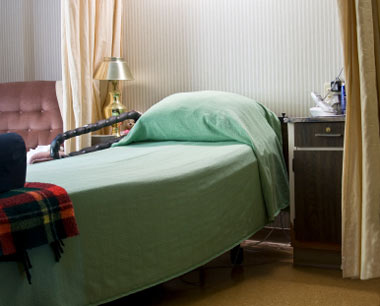
empty-bed-in-nursing-homeResident Death at Paramount Meadows

For elderly adults who live on their own or in nursing homes and assisted-living facilities, falls can result in serious and life-threatening injuries. While falls are not the result of elder abuse, they can occur when there is a clear issue of nursing home neglect. A recent article in the New York Times emphasized that the number of reported falls among older adults—many of those accidents leading to serious and sometimes fatal injuries—is a number that is “soaring.”

Nursing Home Regulations file000289604980Aimed at Preventing Falls

How can nursing homes take steps to prevent dangerous falls? The New York Times article discusses the policies put in place recently by a retirement community which require that, during mealtimes, residents who use walkers to get around must have their walkers “valet parked” after they find a seat at the table. In addition, they are not permitted to use their walkers during the meal—they must stay in their seats while staff members serve them. While many residents of the facility argued that the policy “infringed on [one’s] freedom of movement,” it prevented a number of serious falls at the buffet.

Who looks out for aging Californians who do not have relatives our outside caregivers to keep an eye out for the signs of elder abuse?  The California State Long-Term Care Ombudsman Program is in place to make sure that older adults receive proper care in long-term care facilities across the state.  What is a long-term care facility?  Examples in California include: nursing homes, assisted-living facilities, and residential care facilities for the elderly (RCFEs).

San Diego residents following the latest news about RCFEs know that many of these facilities in our state have fallen under much scrutiny in recent months, along with many assisted-living facilities.  The Long-Term Care (LTC) Ombudsman program speID-100190126cifically “investigates elder abuse complaints” at facilities such as these.

Services Offered by the Long-Term Care Ombudsman Program

Is elder care in America working, or do we need a new system to ensure better nursing home quality of care for seniors?  According to a recent article in Forbes, the system as it currently stands just is not working.  Indeed, the author suggests that the disproportionate attention to caution and safety results in risk aversion, which actually may diminish the quality of care that the elderly receive at nursing homes and assisted living facilities.

Nursing Home CareDoes Risk Aversion Result in Lower Quality of Life?

Why would risk aversion result in seniors experiencing a lower quality of life?  The article explains that many assisted-living facilities are particularly concerned about accusations of neglect.  As a result, each time a patient complains of pain or falls, staff at the facility will call an ambulance.

Changes are on the way for nursing homes and California assisted living facilities.  In the midst of shifts to the law, victims of nursing home abuse are filing a class action lawsuit against the owner of 57 skilled nursing facilities in the state, according to an article from Courthouse News Service.  The owner, Schlomo Rechnitz, owns more facilities in the state than any other, with nurfile451297827287 (1)sing homes in nine different California cities, according to a recent report in the Long Beach Press-Telegram.  Rechnitz’s facilities are accused of “chronic understaffing” with allegations of “Actual or suspected abuse or neglect.”

Details of the Class Action Lawsuit

The lawsuit was filed after several years of investigation into the practices at many of Rechnitz’s facilities.  Rechnitz owns Brius Management and Brius LLC, and he owns nursing homes in Inglewood, Los Angeles, Norwalk, Pasadena, San Gabriel, and several other California cities.

New Bill Raises Penalties for ElderSacramento_Capitol Abuse and Neglect

Is the state of California taking seriously the problems with nursing home abuse and elder neglect at assisted-living facilities?  According to a recent article in UT San Diego, Governor Jerry Brown just signed into law a bill that will impose “a 100-fold increase in the top fine for violations of state regulations at assisted-living homes for the elderly.”  Before Governor Brown signed the bill, the highest fine for a violation that results in the death of a resident was only $150.  Now, the top fine rose drastically to $15,000.

Fines for elder abuse and neglect resulting in the death of an older adult are not the only penalty increases.  To be sure, the bill will also raise the maximum fine for “violations leading to serious injury or abuse from $150 to $10,000.”  And the new law will not just apply to assisted-living facilities, as was originally proposed in the bill co-authored by Assemblyman Brian Maienschein of San Diego.  It will “apply to all community care facilities in the state.”

A recent article in the Examiner alleges that Scott Phipps of Phisco Fiduciary committed elder abuse against a senior conservatee, Elinor Frerichs.  Elder advocates argue that Scott Phipps kept Frerichs “confined and isolated” at Lakeside Park, her asfile0001748266226sisted living facility in Oakland.  If true, the fiduciary may have violated the rights provided to conservatees in the state of California.

Conservatee’s Rights in California

According to the Notice of Conservatee’s Rights, our state makes clear that, when an elderly person becomes a conservatee, they do not lose all rights to handle decisions.  Indeed, “he or she does not necessarily lose the right to take part in important decisions affecting his or her property and way of life.”  The conservatee is entitled to “ask questions and to express concerns and complaints about the conservatorship and the actions of his or her conservator.”

Many of us have heard about assisted living facility reforms pending before the California legislature, as well as those aimed specifically at residential care facilities for the elderly (RCFEs).  But are those reforms sufficient to ensure that California seniors are safe from elder abuse?  According to a recent story from KQED’s State of Health, many elder justice advocates in California do not believe the reforms are going to do enough.

Recent History of Elder Abuse in San Diego

According to Deborah Schoch, an advocate with the California HealthCare Foundation Center for Health Reporting, the number of assisting living facilities in our state essentially doubled over the last 25 years.  For whom are these faciwoman-65675_1280lities designed?  According to Schoch, they are intended for older, healthy adults who are “relatively independent.” Yet many of these facilities have taken in patients who require much more extensive levels of care, and assisted living facilities “are not designed to deliver skilled nursing care.”

Senate Bill Could Impose Tougher Penalties

With the serious elder abuse problems in residential care facilities for the elderly (RCFEs) that have been coming to light in recent months, it shouldn’t come as a surprise to California residents that a new senate bill aims to “give California regulators the power to impose tougher penalties,” according to an article in Westport News.

old Guy
What is this legislation?  The bill, SB1153, would provide the California Department of Social Services (DSS) greater authority over care facilities that break the law.  According to another article in the San FranciscoChronicle, the bill would allow the California DSS to “ban new admissions to residential care facilities for the elderly that fail to correct serious health and safety violations.”  And when RCFEs fail to pay their fines, the SB1153 would allow regulators with DSS to “block admissions to facilities.”

Profiting from Bad Hospice Ethics

Last week, we discussed a recent phenomenon in the hospice care industry that’s quickly becoming an elder abuse concern. Specifically, hospice—a form of care designed to allow “patients to die at home or in other familiar surroundings,” according to an article in the Washington Post—has turned into a financially lucrative business. But is it an ethical one? Are hospice companies acting outside the boundaries of the law? And is it possible to take legal action against hospice chains that recruit patients who aren’t suffering from a terminal illness?

Old%20Dying%20Woman.jpgFirst, it’s important to have a clear idea about why hospices are bringing in relatively healthy older adults, and how these companies are profiting from non-terminal patients. How did this start to happen? In short, many hospice care centers have begun recruiting patients with aggressive marketing tactics, and many of those patients aren’t terminal. It’s in the financial interest of a hospice chain to “find patients well before death,” the Washington Post reported. And the reason is simple: “Medicare pays a hospice about $150 a day per patient for routine care, regardless of whether the company sends a nurse or any other worker out that day. That means healthier patients, who generally need less help and live longer, yield more profits.”

Contact Information