Articles Posted in Southern California Elder Abuse

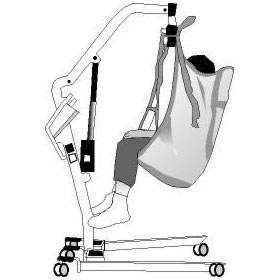
The California Department of Public Health has levied its harshest fine against a nursing home after a resident fell from a mechanical lift. According to reports, the lift was being to transfer a 60-year-old patient from her wheelchair and into her bed. As nursing assistants were transferring the woman, the sling holding the woman broke, causing the woman to fall hard to the ground. She struck her head on a nearby door, causing a severe brain injury, and ultimately causing her death four days later.

Lift.jpg An investigation by the Department of Public Health revealed that the nursing home, the Eskaton Care Center, failed to properly maintain the lift. The lift, which law required be checked monthly, had not been checked for five years. The DPH report stated that the sling appeared worn and had “what appeared to be bleached out blood stains at the center.”

The nursing home can appeal the fine (and the AA citation it received), but it’s not clear if it will. “We’re mortified,” Trevor Hammond, the nursing home’s chief operating officer, told the Modesto Bee. “We had a tragedy when a piece of equipment failed. It was a catastrophe.”

This story makes one wonder what would happen if a hidden camera sting was done in every nursing home. The attorney general of New York placed a hidden camera in a single room of a long-term care facility, which resulted in an indictment against nine nurses, the nursing home, for a whopping 169 separate crimes.

The indictment filed in the case alleges 57 instances of neglect during a three-month period in 2009. With the family’s permission, a hidden camera was placed in the room of a 53-year-old resident who suffers from multiple sclerosis and other mental and physical illnesses. The video revealed that the nurses failed, on several occasions, to turn the patient regularly as required, failed to medicate as needed, treat his pressure ulcers, or even change the resident’s clothing. Of course, in the medical chart, these nurses stated that all this care had been provided. The fraudulent medical charting resulted in further criminal charges.

In interesting footnote to the story, when the alleged abuse revealed, several people came to The Record newspaper to tell their stories of abuse or neglect inside the facility, including unanswered call lights and untreated infections and bed sores.

stop-sign1.pngThe California Advocates for Nursing Home Reform (CANHR) has launched a comprehensive website that addresses the growing problem of drug misuse in California nursing homes. Every day, approximately 25,000 California nursing home patients are given an antipsychotic drug. Half of all dementia patients are administered these drugs despite FDA warnings these drugs can kill a dementia patient.

Because of this CANHR has launched a campaign to help end the drugging of California nursing home residents. CANHR states its goal this way:

The goal of the campaign is to stop nursing homes and doctors from misusing dangerous antipsychotic drugs and other types of psychoactive drugs to chemically restrain residents and to replace drugging with individualized care. Through education, advocacy and political action, we seek to bring Californians together to end this harmful practice.

A resident of St. Edna skilled nursing facility in Santa Ana (a Covenant Care facility) was awarded $3.1 million by an Orange County after the jury found that the nursing home failed to recognize that the resident was overdosing on morphine. The jury also found that the nursing home acted with malice or oppression, and will award punitive damages at a hearing next Tuesday.

St. Edna’s was among the many California nursing homes who received $880 million in Medi-Cal compensation from the state in a program that began in 2004, and was designed to promote care and avoid staffing deficiencies. Many homes that received the additional money still reduced staffing, despite profiting from the additional funds. Apparently St. Ednas was one of those homes.

In this case, Barbara Lefforge was admitted to St. Edna on Sept. 17, 2007, to rehabilitate from tendon repair surgery. Her surgeon mistakenly recommended 50 mg of morphine for pain instead of 50 mg of Demerol. That is a huge dose of morphine, which Lefforge’s attorney argued should have been promptly caught by the nursing home staff. According to reports, a nurse at the facility could not get the full does, so took 30 mg from an office emergency kit and gave it to Lefforge, who suffered an overdose, which itself went unnoticed by the staff. She suffered a major brain injury.

The family of a man who was found dead in a ditch near a freeway overpass is blaming a Long Beach hospital for his death. Joseph Castillo, 63, had apparently been dead for several days when his body was found near the 405 Freeway near the 710 Freeway off-ramp.

According to family, Castillo suffered from advanced cancer, dementia, and diabetes, and had a trachea tube in his throat when he was released from Pacific Hospital in Long Beach at 2:00 a.m. on the 4th of July. He had been taken there when he collapsed at home the day before. After spending several hours in the hospital, he was released from the hospital, where it appears he just walked away.

When Castillo didn’t return home, the hospital called the police to report him missing. Castillo’s daughter said her family was unaware that her father was going to be released from the hospital, and expected that she, or someone else from her family, would have received a call to take the dementia suffering Castillo home. She believes her father was released prematurely because he was a Medi-Cal patient, and that he would be alive today had the family been contacted.

Over the last six years, complaints against Ventura County nursing homes are up almost twentyfold despite a California law that pumped nearly $900 million of Medi-Cal money into nursing homes throughout California. Remarkably, just prior to receiving the additional funds, Ventura County ombudsmen filed only 10 complaints against local nursing facilities, yet over a the period of July 2009 to May 2010 the same ombudsmen filed 194 complaints.

“The numbers show that (the law) did not do what it was supposed to do: increase the quality of care for residents in nursing homes,” Sylvia Taylor Stein, executive director of the Long Term Care Services of Ventura County ombudsman program, told the Ventura County Star. “They were given a checkbook with no oversight.”

By way of example, Oxnard’s Shoreline Care Center received $877,356.00 in additional Medi-Cal funding from 2004 to 2008, but records show that the facility actually provided less nursing hours per patient per day than it did prior to the funding increase. It’s not surprising that the nursing home took in $4.1 million in profits after the law was passed.

In an ongoing investigation, journalists Tracy Weber and Charles Ornstein of ProPublica have a startling article out that says that more than 3,500 registered nurses with “clean” nursing licenses from the State of California have been punished for misconduct in other states. According to the article, approximately 2,000 of these nurses will now face discipline in California.

The article states that California officials won’t disclose the names of nurses who were discovered to have disciplinary records until charges are filed, but will be filing emergency petitions with the board for nurses who are viewed as a threat to public safety.

Weber and Ornstein easily uncovered cases involving current California nurses. Here’s a sampling:

SmartMoney.com has an article out entitled 10 Things Nursing Homes Won’t Tell You. Which has been adapted from the book “1,001 Things They Won’t Tell You: An Insider’s Guide to Spending, Saving, and Living Wisely,” by Jonathan Dahl.

Walton Law Firm thought you might like to see the list:

1. “We’re careless about the drugs we give out.”

The California legislature has called for an investigation into why only one-third of the fines assessed against nursing homes for negligent care are being collected. The audit that was approved in February is expected to look how the funds are collected and how they’re spent.

Mike Feuer, D-Los Angeles told California Watch, “The whole point of having citation accounts and the penalty system is to deter nursing homes from doing anything but provide the highest quality care to residents. If the fines coming in are less than a third of (those) issued, it leaves one to wonder if the state is being as effective as it could be in protecting nursing home residents.”

Records obtained by California Watch reveal that in 2008 state regulators collected only $1.5 million of the $5 million that had been assessed against California skilled nursing facilities. In comparison, the same regulators have collected nearly 80 percent of the fines levied against hospitals. Kathleen Billingsley, the deputy director of the Department of Public Health Center for Healthcare Quality, said nursing homes who appeal fines do not have to pay until the process is completed.

California Watch is out with a disturbing report alleging that California nursing homes that received more than $880 million in additional taxpayer funds under a law designed to boost care, took the money did the opposite by cutting staff and wages. [“Nursing homes received millions while cutting staff, wages“] In its investigation, California Watch found 232 California nursing homes that either cut staffing, or paid lower wages to workers after receiving money from the state.

It appears that many of the nursing homes investigated used the state money to improve their financial health, not the health of its residents, and those that cut the most staff had, not surprisingly, more deficiencies issued by state inspectors than those facilities that did not cut staff.

“There was an implicit good faith agreement that things would get better … and that was broken,” state Sen. Elaine Alquist, D-Santa Clara, told California Watch. “It was broken for the people of California and for a very vulnerable population – those that need the greatest care and those that can’t advocate for themselves.”

Contact Information