
Articles Posted in San Diego Elder Abuse

Many assisted living or nursing home facilities emphasize structure and rules to provide stability for residents and ease of care for staff members, but some facilities are trying new and unique approaches. Our San Diego nursing home attorney knows how important it is for your loved ones to receive personalized attention and care, as well as top-notch medical treatment. Two stories recently caught our interest not only for the unique treatments they presented, but also for their positive perspective on providing innovative elder care.

At some facilities, “therapy dogs” and other animals are used to bring joy to nursing home patients. According to a local ABC news station in Ohio, residents at a skilled nursing facility recently received a visit from Gremlin, a 7-year-old pit bill rescue and certified therapy dog. Gremlin, a former a bait dog in a dog-fighting ring, was terribly abused before she was rescued. She can no longer bark and is partially deaf. Although the pit bull may seem intimidating at first, residents quickly warmed to Gremlin’s sweet demeanor and face licks. A staff member reported that residents’ faces lit up as soon as the dog walked into the room and that the dog’s presence prompted most residents to come out of their rooms and be social. One resident marveled at Gremlin’s ability to give love after being so horribly abused, reminding patients and staff alike that love and affection truly can be the best medicine.

Another nursing home also uses a form of alternative therapy. Beatitudes, a nursing facility located in Arizona, has an unusual philosophy: “To let patients do what they want.” The facility was originally created to provide care to seniors who prefer independent living options, but Beatitudes also provides more advanced care if needed, such as home care services and assisted living.

For Alzheimer’s residents in particular, Beatitudes offers a unique approach because residents are encouraged to pursue the activities they prefer and enjoy, which could include playing the piano, eating what they wish, or participating in arts and crafts. According to a local NBC station in Arizona, experts at the Beatitudes facility say that one of the mistakes caregivers often make is not incorporating Alzheimer’s patients’ previous passions into their everyday lives.

The staff at Beatitudes is trained to listen to their patients, to let them make their own decisions, and to show them love and support. They also aim to create positive emotional experiences for Alzheimer’s patients, which, research suggests, reduces stress and behavioral problems. For example, if an Alzheimer’s patient asks where her deceased husband is, a staff member may respond that “he can’t be here right now” instead of “he died four years ago.” Such a response answers the patient’s question without forcing her to relive the pain.

elderly%20couple.jpgResidents at Beatitudes still receive the medical treatment ordered by their doctors. However, the staff attempts to remove discomforts (e.g. deep-seated wheelchairs that make it more difficult for patients to stand up) and reviews residents’ biographies in order to make them feel at home.

Unlike many negligent nursing homes, Beatitudes has also drastically reduced the distribution of antipsychotics and certain medications. The staff also tries to encourage activities that will foster group participation and interaction between patients, staff, and family members, such as block building and coloring. Under the Beatitudes approach, residents and their families report a better quality of life, less staff turnover, and lower costs.

Continue reading

restraints.jpgSan Diego nursing home neglect is often difficult to identify, because it can take so many forms. In many cases the neglect causes already fragile residents to develop secondary complications and it is those complications which lead to severe injuries or the death of the resident. Many families are ultimately left unaware that their loved one would likely still be alive if they had received the level of care to which they were entitled. Helping residents identify and prove mistreatment is a key role played by a San Diego nursing home attorney.

There are often many signs and symptoms that if identified can be a good indicator of neglect. One of the more complex forms of California nursing home abuse that occurs with far too much frequency involves misuse of medication. As the Consumerist explained last week in an elder care story, many area nursing homes seek to control residents by essentially drugging them into submission. Appropriate care at these facilities necessitates that the individual needs of each resident be addressed. However instead of providing that care, many nursing homes instead chose to give these residents powerful antipsychotic drugs.

The problem is particularly prevalent for dementia and Alzheimer’s patients. Often these seniors are given vast quantities of drugs intended to be used by those with bipolar disorder or schizophrenia. These drugs have the effect of turning many of these residents in virtual zombies. Tragically, family members often visit their loved one at a facility only to discover that their relative appears lifeless or lacking a vigor that they previous had. Most states require that all residents give informed consent before they are given these drugs. Not surprisingly, many facilities fail to get that consent before administering the medication.

Many of these antipsychotic drugs are given to patients who have not even received a diagnosis for a condition in which the medication was designed to treat. This represents an incredibly dangerous form of abuse. The United States Food and Drug Administration recently explained how the use of these antipsychotic drugs on older dementia patients for unapproved uses can nearly double their risk of death. With sobering statistics like that there is no reason why any facility should even consider using these drugs in this way and putting vulnerable resident lives on the line.

It is important for family members to understand the warning signs of these “chemical restraints” and to know that help is out there. The California Advocates for Nursing Home Reform have actually put together a helpful packet for those in this situation entitled “What You Should Know to Fight the Misuse of Psychoactive Drugs in California Nursing Homes.”

Continue reading

marlow_Abuse_bed_t352.jpg

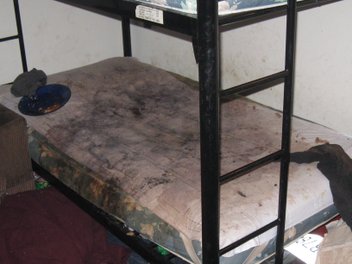
Jeremy Marlow suffered from cerebral palsy and died at the young age of 28. But police believe that his death had nothing to do with his affliction, and everything to do with the way he was treated by his mother and brother in their El Cajon apartment. Deborah Marlow and her son Christopher Marlow will stand trial in June on charges of involuntary manslaughter in the death of Jeremy, who was living with the defendants at the time of his death.

An investigation was triggered when Christopher Marlow called 911 to report that his brother Jeremy was having trouble breathing. When paramedics arrived, they discovered an apartment full of rotting food, animal waste, and trash. In his filthy bed, paramedics found Jeremy weighing less than 100 pounds. He was taken to a local hospital where he died five days later.

In addition to charges of involuntary manslaughter, the defendants have been charged with neglect of a dependent adult causing great bodily injury, as well as charges of animal cruelty.

arnoldbauer_t352.jpg

Max Bauer has no doubt seen a lot in his 93 years. Among his many experiences were those aboard the naval ship USS Vestal, moored in Pearl Harbor in December 1947 when the Japanese attacked. He was particularly proud of being a Pearl Harbor survivor, and placed a special Pearl Harbor Survivor license plate on his car.

In recent year, however, times have been tough for Max. A story in San Diego Union Tribune this morning reveals a man whose life has been on the decline since his wife of 62 years died in 2007. He had become so frail that he required the assistance of a caregiver, who moved into his home in El Cajon to help care for him. That’s when things got really bad.

Increasingly, friends and neighbors didn’t hear from Max, and after concern grew the Sheriff was called out to do a welfare check and were surprised by what they found. Sheriff’s deputies discovered that Max was living in squalor, his house filled with trash, rotting food and rat droppings.

An elder abuse and neglect lawsuit has been filed on behalf of an elderly Korean-American woman who died last year after what the family alleges was abusive treatment by her caregivers. Kyong-hui Duncan died last June while her family was looking for a new nursing home to take her to after it became concerned about the care she was receiving.

When the family’s concerns began, Ms. Duncan’s grandson installed a security camera in her room. The camera wasn’t hidden, and caregivers knew about its presence, but family members became suspicious when they would frequently find the camera turned off when they came for visits.

Though the family claims the camera was often shut off by care providers during routine visits, images taken by the camera during one such visit show caregivers violently shaking Duncan as they attempt to place her in a wheelchair. The family adds that she would often be seen sitting in her room for hours, crying for help, sometimes upside down in her wheelchair, without any response from the attendants at the center. Bruises were also periodically found on her body, while an autopsy revealed toxins from medicines not prescribed by her doctors.

Homicide detectives in San Diego were investigating the death of an elderly woman from the Palm City area. According to reports, the woman was being cared for by a professional “caretaker.” When a relative of the 83-year-old victim called police to check on the victim, police went to the woman’s home and found her dead in the bathroom.

According to police, there were no signs of trauma but that elder abuse was suspected. Police arrested caretaker Maria Moore on suspicion of elder abuse and booked her into county jail. A cause of death has not been determined.

News accounts do not state where Moore was employed by a home health agency or whether or she was working on her own. If is determined that the victim’s death was due to neglect, Moore and the agency she works with (if there is one) may face civil liability under California’s Elder Abuse and Dependent Adult Civil Protection Act.

A 72-year-old woman suffered burns on her hands and feet while under the care of an Escondido woman and her son at their home-based elder care facility. Mila Labayen, 74, and her son, Steve Perez Lopez, 50, face criminal charges for elder abuse arising from their failure to seek immediate medical attention for the injuries of the resident who suffers from dementia. In addition, Mr. Lopez is charged with draining $45,000 from the bank account of another elderly resident, who suffers from schizophrenia. Mr. Lopez allegedly took the money while out on bail for charges relating to the elder abuse claim. Alert bank employees alerted authorities to the suspicious withdrawal of money.

It is unclear what caused the 72-year-old woman’s burns, but by the time her daughter learned of her injuries and brought her to the hospital, her skin was already sloughing off, and she remained in the hospital’s burn unit for nine days.

The elder care home, Liberty Care Homes III, located on the 1100 block of Via Rancho Parkway, was owned and operated by Ms. Labayan and was licensed to provide residential care for up to six elderly people. The license was first issued in 1993. Liberty Care Homes III is now closed.

A certified nursing assistant working in a San Diego nursing home is being held on charges of rape and elder abuse after being caught having sex with a nursing home resident. According to reports, an employee of the El Dorado Care Center in El Cajon walked into the room of an elderly patient and saw Felix Panem sexually assaulting the patient. Panem is being held on $450,000 bail, and faces a possible 10 year sentence if convicted.

Sexual assault in the nursing home is not common, but it is certainly not rare. Because of age and infirmity, including memory problems such as dementia and Alzheimer’s disease, nursing home residents can be fairly easy targets for the criminally inclined. The Walton Law Firm has has cases involving sexual assault, physical abuse, and burglary committed by employee caregivers. Sometimes it’s just a rouge employee, but there are times when the facilities fail to perform adequate background checks that would have revealed the criminal propensity of a caregiver.

Investigators told the Union Tribune that they believe that the elderly resident is Panem’s only victim, but believe that she may have been raped by him on other occasions. The El Dorado Care Center is a skilled-nursing facility on Washington Street in El Cajon, California.

The North County Times had a good column on the cold reality that elder abuse or neglect can happen anywhere. Susan Reichel, CEO of Advanced Home Health Services in San Diego says that an estimated 2 million elderly Americans are victims of elder abuse, whether its physical, mental, emotional, or financial, and it can occur in the home or at a nursing facility.

We, of course, know this. At this law firm, we take legal action against nursing homes and residential care facilities for abuse or neglect all the time. But it’s always worth reminding people that such abuse cases are real and all around us. Remarkably, it is estimated that 84 percent of elder abuse cases go unreported.

The author makes a list of clues to look out for that might be signs of abuse or neglect, and we though it would be helpful to list them here.

The California State Assembly voted overwhelmingly to approve Assembly Bill 392, which would immediately restore $1.6 million to Long-Term Care Ombudsman programs throughout the state. Much of the funding to the programs was cut last year when Gov. Schwarzenegger vetoed the Ombudsman funding request.

In June 2009, a nursing home owner was arrested on allegations of criminal abuse and neglect, when a resident of his facility was so severely neglect that pressure sores went untreated and led to a fatal infection. Numerous nursing homes throughout the state have received citations for failing to provide adequate care of residents. Without an Ombudsman program, it is difficult to monitor the care the residents of these facilities.

“We need to take every step we can to protect seniors who may be at serious risk of abuse or exploitation,” said Assembly member Mike Feuer (D-Los Angeles), who authored the bill. “The funds provided to Ombudsman programs in AB 392 fill this important need during the next year. Isolated and vulnerable residents of nursing homes and assisted living facilities have nowhere else to turn, and their lives depend upon these programs being restored immediately.”

Contact Information