
Articles Posted in Southern California Elder Abuse

The California legislature has called for an investigation into why only one-third of the fines assessed against nursing homes for negligent care are being collected. The audit that was approved in February is expected to look how the funds are collected and how they’re spent.

Mike Feuer, D-Los Angeles told California Watch, “The whole point of having citation accounts and the penalty system is to deter nursing homes from doing anything but provide the highest quality care to residents. If the fines coming in are less than a third of (those) issued, it leaves one to wonder if the state is being as effective as it could be in protecting nursing home residents.”

Records obtained by California Watch reveal that in 2008 state regulators collected only $1.5 million of the $5 million that had been assessed against California skilled nursing facilities. In comparison, the same regulators have collected nearly 80 percent of the fines levied against hospitals. Kathleen Billingsley, the deputy director of the Department of Public Health Center for Healthcare Quality, said nursing homes who appeal fines do not have to pay until the process is completed.

California Watch is out with a disturbing report alleging that California nursing homes that received more than $880 million in additional taxpayer funds under a law designed to boost care, took the money did the opposite by cutting staff and wages. [“Nursing homes received millions while cutting staff, wages“] In its investigation, California Watch found 232 California nursing homes that either cut staffing, or paid lower wages to workers after receiving money from the state.

It appears that many of the nursing homes investigated used the state money to improve their financial health, not the health of its residents, and those that cut the most staff had, not surprisingly, more deficiencies issued by state inspectors than those facilities that did not cut staff.

“There was an implicit good faith agreement that things would get better … and that was broken,” state Sen. Elaine Alquist, D-Santa Clara, told California Watch. “It was broken for the people of California and for a very vulnerable population – those that need the greatest care and those that can’t advocate for themselves.”

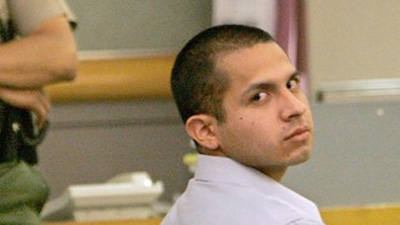
It took jurors only five hours to convict 21-year-old Cesar Ulloa of criminal elder abuse for his brutal treatment of residents at the Calabasas nursing home where he worked. According to prosecutors, Ulloa would laugh as he attacked his victims, many of whom were to demented to be able to call for help. He faces life in prison.

Ulloa.jpg

In one of the assaults, a fellow employee witnessed Ulloa jump on the chest of a non-verbal 78-year-old woman’s chest, and throwing her on the bed as she struggled. To another elderly male resident, Ulloa jumped off a dresser and landed with both knees on the man’s abdomen, seriously injuring the man. He apparently would laugh with delight while brutalizing the patients.

Suspicion over Ulloa actions was raised after the wife of a resident received an anonymous phone call the day after her husband’s funeral. The call said that her husband had been abused, and that his death may have been related to the abuse, something the family suspected. The police were notified, and the victim’s body exhumed for an autopsy that revealed more than 24 fractures. The man’s death was determined to be caused by blunt force trauma.

Heritage Rehabilitation Center in Long Beach has been sued for a sexual assault that occurred there just last month. According to the lawsuit, filed by James Morgan, the victim “Jane Doe” was suffered elder abuse and neglect when a man entered her room through an unlocked window and assaulted her. The suit also claims there may be other victims.

The suit alleges that the nursing facility was chronically understaffed. According to Morgan, “This was an active time of the day and there was nobody anywhere, which supports our theory they didn’t have enough staff in there to look after residents or see people coming in from the outside.”

Heritage Rehabilitation Center is a 161 bed facility that has been in operation for more than 35 years. It currently maintains a three star (out of five) on Medicare’s “Nursing Home Compare” website.

The healthcare reform bill signed by President Obama this week will have an impact on nursing homes and long-term care. The most dramatic change will come in the form of long-term care insurance, and provision that was long championed by the Senator Edward Kennedy. Under the Community Living Assistance Services and Support Act (CLASS), all Americans will automatically be enrolled in a long-term care insurance program, but will have the option to opt out.

Under the Act, individuals will start paying a premium immediately, and will be able to use the benefit after five years of contribution to the program. The benefit, though, is not much, as it is expected to be about $50 per day to offset other long-term care costs.

The healthcare reform bill will also start to close the “donut hole” in Medicare Part D coverage for prescription drugs. Patients will immediately begin receiving a rebate for drug costs that fall into the gap, and drug manufacturers will be required to provide a discount on brand name drugs. Over time, the gap in coverage will be phased out entirely.

All licensed nursing homes in California are licensed and certified by the California Department of Public Health, which conducts an annual inspection of every licensed skilled nursing facility in the state. In addition, the DPH is charged with the duty to investigate complaints of neglect or abuse, and issue the results of its investigation. Here is some general information about making a complaint against a nursing home.

First, who can make a complaint? Under California law, any person can make a complaint about a nursing home; it does not just have to be the resident, family member, or responsible party. Complaints may be made anonymously.

When is a good time to make a complaint? A complaint should be made whenever one considers the treatment problems to be serious enough to report. It is usually a good idea to express your complaints to the facility first, but if you feel like you’re not being taken seriously, call DPH.

In their ongoing series on nursing oversight in the State of California, Tracy Weber and Charles Ornstein of ProPublica are out with another story about California’s shortcomings in regulating healthcare professionals. Weber and Ornstein reveal that the national database that tracks dangerous or incompetent caregivers is missing serious disciplinary actions against “what are probably thousands” of health care providers. The revelations apparently surprised federal health officials, who just last month proclaimed that “no data is missing.”

For almost twenty years the federal government has kept a database of disciplinary actions against doctors and dentist, and in 1999 individual state boards were required to include in the database reports on all other healthcare professional, including nurses, whose licenses were restricted or revoked. In California, however, not all penalized caregivers were included in the federal database. For example, California has formally disciplined 84 psychiatric technicians over the last two years, yet the federal database does not contain a single report of discipline against a psychiatric technician in the State of California.

The dangers of an incomplete database are obvious, as Dr. Sidney M. Wolfe of the Public Citizen’s Health Research Group observed, prospective employers of health care professions could be given “a false sense of security that somebody who may be really dangerous isn’t, because their name isn’t there.”

The New York Times is out with an article about lack of oversight given to the more than 400 long-term acute care hospitals that operate in the United States. These hospitals, most of which operate as for-profit organizations, are supposed to provide care for individuals that are too sick for traditional nursing homes, but too stable to require regular hospitalization. According to the article, long-term care hospitals were much more likely to be cited for serious violations of Medicare rules than regular hospitals, and had a higher incidence of bedsores and infections.

While the care might be questionable, the no one will question the profitability of these health care providers. In 2007, the profit-margins on long-term care hospitals was 6 percent on Medicare patients, which regular acute-care hospitals lost an average of 6 percent on Medicare patients. How does that happen? In a presentation last month by Select Medical, an owner of several long-term care hospitals, to its investors, it revealed that it maintains its profits by monitoring staffing and lowering supply costs.

Those of us who represent victims of neglect in long-term care facilities know that “monitoring staffing” is another way of saying that it keeps staffing levels at the lowest numbers allowable by law. That usually means a lower quality of care. As for Select Medical, this approach is victimizing patients.

The nursing home roommate from hell. A former San Diego nursing home resident was sentenced to 19 years in jail yesterday for setting a series of fires at two local nursing homes while she was a resident. According to an investigation, Mary Wilson tried to kill her nursing home roommate by setting her bed on fire while she slept. In another incident, Wilson threatened a resident with a knife.

The first incident occurred in January of 2009, when Wilson was a resident of the San Diego skilled nursing facility El Dorado Care Center in El Cajon. She was placed in a room with two roommates, both of whom were on oxygen and confined to their beds. In the middle of the night, Wilson got out of her bed and set the mattress on fire of one of her roommates. The fire alarm was triggered, and caregivers were able to extinguish the flame before any injuries occurred.

In May, Wilson was transferred to the assisted living center Golden Paradise Senior Living in National City. Shortly after her arrival, she set fire to trash cans and in the library. Luckily, there were no injuries.

Nursing home abuse and neglect lawyers in California often lament the state’s weak enforcement of bad nursing homes. The California Department of Public Health, due primarily to inadequate funding, rarely provides the strong oversight of California’s 1,200 or so licensed skilled nursing facilities. As a result, bad nursing homes operate with relative impunity, and those who screw up rarely suffer the consequences.

Apparently California is not alone. In Connecticut, the director of the state’s Department of Public Health said his unit is dangerously understaffed. He has only four investigators to oversee the state’s 231 certified nursing facilities, and told the Norwich Bulletin that if he had 10 more, he would have a lot more cases.

State Sen. Edith Prague has apparently had enough. She is set to re-introduce a bill that would make it easier to hold the owners of nursing homes criminally responsible for abuse and neglect of patients in their facilities. Under Prague’s bill, the state’s DPH would be required to include a notice in nursing home applications telling owners they could be held criminally liable for patient neglect by employees, including for things such as inadequate staffing. “You can’t sue the state, but the nursing home owners who cut back on staffing I feel should be held responsible,” Prague said.

Contact Information