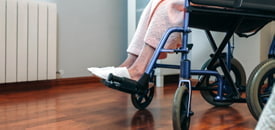
Choosing the best nursing home for an elderly loved one can be a difficult task. Although some information about nursing home ratings and previous safety violations can be located, recent reports suggest that information is often incomplete, or even worse, that it may be incorrect and misleading. Moreover, you cannot always know for certain whether a facility will pose injury risks to its residents based on its history. While a history of safety violations should certainly be a cause for concern, even skilled nursing facilities with clear records can be places where elderly residents sustain serious and life-threatening injuries. 

How can you know what to look for in a nursing home? More often than not, it is important to know what you should not see at a nursing home or assisted-living facility. According to U.S. News & World Report, it is more important than ever to be able to recognize red flags at nursing homes. The following are red flags that should raise concern.

High Rate of Infections and Deaths From COVID-19

Nursing home abuse and neglect injuries in San Bernardino nursing homes can take many different forms, and they can have varying causes. It is important for families with elderly loved ones in nursing homes and assisted-living facilities to be on the lookout for common injury signs, and to know when those injuries may have resulted from abuse or neglect. In many cases, nursing homes may not intend to cause any harm, but as a result of passive neglect, seniors can suffer debilitating and life-threatening harm. In those cases, the nursing home may be liable for damages. The following are among the common types of injuries at nursing homes and assisted-living facilities in Southern California.

Broken Bones or Fractures

A senior at a nursing home can sustain broken bone or fracture injuries in many different ways, and a bone fracture may be a sign of abuse or neglect. In some instances, broken bones can result from a slip and fall, or a fall out of bed. Yet fractures can also be signs of intentional physical abuse. Even if a senior slips and breaks a bone, the facility may be responsible. 

Newly proposed legislation in California is designed to end so-called “zombie” licenses for nursing homes in Orange County and throughout the state. What are zombie licenses when it comes to nursing homes? According to a recent article in the Times of San Diego, the California Department of Public Health has indicated that it does not have the authority to “disqualify owners and operators [of nursing homes] who are already in operation in the state,” which means that nursing home chains can acquired properties without obtaining a license first. As such, even nursing home chains or owners with histories of safety and health violations can operate nursing homes without being required to meet certain benchmarks first or to qualify for a license to operate a facility.

California Assembly Bill 1502 is designed to stop this practice from continuing and to ensure that owners of nursing homes obtain licenses before they are able to acquire or operate a nursing home in the state. Our Orange County nursing home abuse lawyers can tell you more about the pending bill.

Nursing Home Reform in California and Details of Assembly Bill 1502

Hip fractures can happen almost anywhere in Riverside County when an older adult falls or slips, but hip fractures can be particularly common in nursing home settings when seniors do not have proper care or when facilities fail to maintain the premises in a manner that is safe for its residents. While hip fractures often heal fully when they occur in younger people, a hip fracture in an older adult can be devastating. Indeed, hip fractures in the elderly can have disastrous consequences, resulting in decreased mobility and the need for care for the rest of a person’s life. 

Our Riverside County nursing home neglect lawyers want to provide you with more information about hip fractures among older adults in Riverside County nursing homes.

Hip Fractures Happen Most Often Because of Falls

It can be extremely disorienting to visit an elderly loved one at a San Diego County nursing home and to discover that your loved one has unexplained injuries or is behaving in a manner indicative of abuse or neglect. When you have concerns about nursing home abuse or neglect at a skilled nursing or assisted-living facility, you should seek advice from a San Diego County nursing home abuse lawyer as soon as possible. You should also follow these steps to protect your loved one’s ability to seek compensation through a nursing home abuse claim/ 

Document the Injury and the Area Where it Happened

First, you should document the injury as best as you can, including the place or area where it happened. If an elderly relative has obvious physical signs of an injury, you should photograph them, and you should also take pictures of the area where the injury occurred. Documenting the scene may be able to show that the facility failed to take necessary steps to keep your loved one safe.

When families in Los Angeles County or elsewhere in Southern California are seeking information about nursing homes and skilled nursing facilities in the state, they often turn to the CMS star rating system and to publicly available information about safety violations. Yet according to a recent report in The New York Times, some of the worst offenses at nursing homes across the country might not be reported to the public. Why are serious nursing home abuse and neglect injuries hidden? The report suggests that a “secretive appeals process” prevents the public from getting the full picture. Our Los Angeles County nursing home abuse attorneys can tell you more. 

Serious Injuries are Not Factored Into the Star Rating System

The Centers for Medicare and Medicaid Services (CMS) publishes information about nursing homes through its star rating system, which is supposed to provide the public with information about recent safety violations at nursing homes and harms suffered by elderly residents. Yet the recent report, which stems from a New York Times investigation, indicates that “at least 2,700 . . . dangerous incidents were not factored into the rating system.”

Does the type of corporation, entity, or individual that owns a nursing home in San Bernardino County affect the likelihood that the facility will be a place where nursing home abuse or neglect occurs? A recent article in Market Watch highlights the particular dangers of facilities that have been bought by private-equity firms and that may not be putting patients first. Indeed, according to that article, residents at many of these facilities face “a threat of imminent danger of death or bodily harm” as a result of poor care at various facilities and California’s failure to take action, according to a judge in the state. That judge described the state government’s failure to protect seniors in nursing homes as a “consistent, endemic, and statewide” problem centered on a lack of investigations into complaints and accusations that have been made against these facilities. 

That recent court decision in California highlights the need for state agencies to take more significant action to protect nursing home residents from injuries caused by abuse and neglect.

California Court Says Department of Public Health Has Failed Nursing Home Residents

When you are helping an elderly parent or loved one to find a nursing home in Orange County or elsewhere in Southern California, the process of searching for a safe facility can be daunting. While nursing home rating systems exist, recent reports suggest that those ratings may not provide a full or accurate picture of safety violations at those facilities or actual staff-patient ratios. Information about safety violations can be more difficult to locate since that information is not easily obtained through a central repository, depending upon the location of the facility and other factors. How, then, can you identify a safe nursing home in Orange County? 

It is critical to keep in mind that any nursing home can be a site of nursing home abuse or neglect. Even facilities that have no histories of negligence can be the subject of a future investigation. Thus it is nearly impossible to know with absolute certainty that a facility is safe. However, there are certain factors you can look for in a facility to have more confidence in its treatment of and care for residents. Our Orange County nursing home abuse attorneys want to provide you with tips for choosing a facility.

Transparency in Policies

Nursing home residents in Riverside County who suffer from Alzheimer’s disease or another form of dementia often become victims of nursing home abuse and neglect. Not only can Alzheimer’s patients be overmedicated with drugs that are inappropriate and that can have dangerous side effects, but they can be targets of abuse for a variety of reasons. The following are five things to know about Alzheimer’s disease and nursing home abuse in Southern California. 

  1. Nursing Home Abuse Against Alzheimer’s Patients Can Take Many Forms

Nursing home abuse and neglect involving Alzheimer’s patients can take many different forms, including physical abuse, emotional or psychological abuse, sexual abuse, willful deprivation, and passive neglect. Each of these forms of abuse has distinctive signs and symptoms, and sometimes those symptoms can be difficult to identify.

More patients in San Diego County nursing homes and across the country are being diagnosed with schizophrenia for reasons that are questionable and raise concerns about nursing home negligence, as a recent article in The New York Times suggested. But are some patients more affected than others, and is race playing a role? A follow-up report in The New York Times argues that Black residents are being disproportionately affected by these harmful diagnoses and subsequent administration of antipsychotic medications, suggesting that nursing home abuse has a clear racial dimension in these situations. Are schizophrenia diagnoses, and other issues in nursing homes, affecting Black residents more than other elderly patients at skilled nursing facilities? 

Black Nursing Home Residents are Diagnosed with Schizophrenia More Often

More nursing home residents are being diagnosed with schizophrenia so that the facilities can administer antipsychotic drugs to “difficult” patients, The New York Times has suggested. Indeed, since nursing home residents with schizophrenia can still readily be prescribed antipsychotic medications (whereas regulations have attempted to reduce the use of antipsychotics in other nursing home cases), there has been a surge in the number of patients diagnosed with schizophrenia. Since 2012, the number of elderly patients diagnosed with schizophrenia has “grown by 70%.” The article points to a new study in the Journal of the American Geriatrics Society, which found that the “impact of this has been more severe on Black residents.”

Contact Information