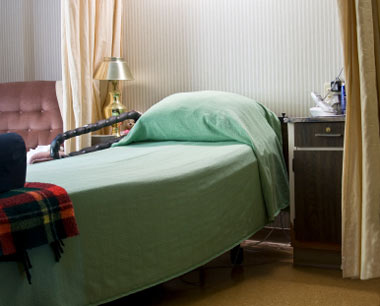
Articles Posted in Residential Care Facilities

file2811310649672According to a recent article from U.S. News & World Report, many nursing homes in California and across the country are working hard to eradicate elder abuse and neglect, but there is still more work to be done. As the article explains, “the next generation of nursing homes is working to shed old stereotypes.” But do cases of nursing home abuse persist?

Changing the Face of Nursing Homes in California

How do most of us imagine nursing facilities when we have not visited loved ones who are residents? The article in U.S. News & World Report notes that, “for many, the image of nursing homes is one of sad, sterile institutions where elderly people are left isolated by family members who stop caring.” Generally speaking, this image of nursing homes is not accurate. We cannot necessarily tell whether a facility is taking good care of its residents—and taking important steps to prevent elder abuse and neglect—just by looking at it. As we have noted in previous posts, numerous nursing homes that have been fined for nursing home abuse or neglect have posh interiors and carry higher price tags than safer facilities.

handsIf California nursing home employees go on strike, who will provide care for patients residing in the facilities? Should families of those patients have concerns about nursing home neglect? According to an article in the Marin Independent Journal, sixty nursing home workers went on strike last month in San Rafael following a string of nursing facility violations from government regulators. The strike was aimed at forcing the nursing facility to cease its understaffing practices and to encourage a work environment in which providing a threshold level of care for patients is among the most important logistics of running the facility. Even if such a strike is intended to improve conditions, who cares for patients while employees are on strike?

Understaffing and High Turnover Limits Quality of Care

The recent strike occurred at San Rafael Healthcare and Wellness Center, which is owned by Brius Healthcare Services. With more than 80 facilities in California, Brius is the largest nursing home chain in our state. For the last 18 months, employees of the nursing home have been working without having a contract. Why are employees working without a contract? About a year and a half ago, those workers rejected the terms of a union-negotiated contracted because it did not do enough to deal with the serious understaffing problem at the facility.

video_surveillance_lawsMany Californians have loved ones in nursing homes or assisted-living facilities. While we want to put our trust in these facilities and to believe that they are treating our elderly parents and relatives properly, many of us worry about the risks of nursing home abuse and neglect. According to a recent article from NBC San Diego, local families want to install cameras in patient bedrooms, “but they are facing a roadblock from the state.”

Documenting Elder Neglect in Southern California

Why wouldn’t the state want to use video cameras in patient rooms to monitor for elder abuse or neglect? According to Joe Balbas, the co-owner of Vista Gardens, “elderly patients in nursing facilities should have the option of having security cameras in their room[s].” Vista Gardens is a residential facility for patients with Alzheimer’s and other forms of dementia. Balbas believes that installing cameras in rooms—at the request of patients and their families—could help to prevent serious injuries.

Amidst news reports of elder abuse and neglect in assisted-living facilities, nursing homes, and residential care facilities for the elderly (RCFEs) across the state, the California Department of Public Health (CDPH) has been criticized for its failure to investigate. What did it fail to investigate, exactly? Elderly patients and their families argue that they reported nursing home abuse incidents to the CDPH, yet they contend that the department didn’t investigate those complaints in a timely manner and failed to properly fine the responsible facilities.

budgetcalculatorMore Funding for Elder Abuse Investigations

According to a recent press release from the California Advocates for Nursing Home Reform (CANHR), Governor Jerry Brown has proposed a budget for the coming fiscal year that would “add more than $30 million and about 260 positions for the Licensing & Certification Division of the California Department of Public Health.” Yet, the most surprising part of the new budget isn’t merely about licensing and certification. Rather, as the CANHR suggests, it’s about taking complaints about nursing home abuse investigations more seriously.

Many of us know that the state of California has been under intense scrutiny for the way it has handled nursing home abuse and neglect violations. In addition to concerns about the frequency with which the California Department of Public Health has investigated a number of complaints, victim advocates also contend that facilities across the state aren’t fined enough to prevent future elder abuse violations.

According to a recent news release from the California Advocates for Nursing Home Reform (CANHR), the Department of Public Health has cited a couple of facilities in southern California for serious violations. And, according to the report, each of the facilities received a $75,000 fine—an amount that suggests that the state is heading in the right direction.

empty-bed-in-nursing-homeResident Death at Paramount Meadows

Who looks out for aging Californians who do not have relatives our outside caregivers to keep an eye out for the signs of elder abuse?  The California State Long-Term Care Ombudsman Program is in place to make sure that older adults receive proper care in long-term care facilities across the state.  What is a long-term care facility?  Examples in California include: nursing homes, assisted-living facilities, and residential care facilities for the elderly (RCFEs).

San Diego residents following the latest news about RCFEs know that many of these facilities in our state have fallen under much scrutiny in recent months, along with many assisted-living facilities.  The Long-Term Care (LTC) Ombudsman program speID-100190126cifically “investigates elder abuse complaints” at facilities such as these.

Services Offered by the Long-Term Care Ombudsman Program

California legislators have proposed assisted-living facility reforms across the state, and the nation-wide attention to elder abuse problems in our state has rallied a variety of advocates to the cause. A recent special report released by the National Senior Citizens Law Center, in conjunction with the California HealthCare Foundation, identifies the key problems with the current assisted living model in California and proposes new “best practices” for ensuring safe care for our elderly loved ones.

Old%20man.jpg
Has your elderly loved one suffered abuse or neglect in an assisted-living facility? You’ll need experienced legal counsel on your side to handle this difficult situation. Contact the dedicated nursing home abuse attorneys at the Walton Law Firm today to learn more about filing a claim for financial compensation.

Overview of Reform Needs

Have you been urged to place your elderly parent in hospice care despite the fact that he or she is not terminally ill? Hospice care is intended for patients who are terminally ill and for whom there is no cure. So why are healthy older adults ending up in hospice? A recent article in the Washington Post revealed that this phenomenon might be a larger problem than we’d like to think. Indeed, over the 2000s, the newspaper reported that the “number of ‘hospice survivors’ in the United States has risen dramatically.” What’s going on? According to the article, “hospice companies earn more by recruiting patients who aren’t actually dying,” since “healthier patients are more profitable because they require fewer visits and stay enrolled longer.”

Hospice.jpg
If you have been pressured to move a parent into hospice care, your elderly loved one might not receive the kind of treatment she or he needs. For-profit companies shouldn’t be allowed to take advantage of older adults. Indeed, we might think of these actions as another form of elder abuse. It’s important to speak to an experienced elder law attorney about your options.

Hospice Discharge Statistics

Woman%27s_hands.jpg

A recent U.S. News & World Report article noted a post-holiday increase in elder care inquiries. During the holiday season, visits with families and loved ones can leave us with “the realization that an aging relative is losing the ability to live independently.” A family expert with the AARP noted that the spike in these inquiries often begins in January and can extend into the following winter months. In fact, seniorhomes.com, a website providing resources for senior living in your area, reported a 58% jump in elder care inquiries just after the holidays came to a close.

Although an assisted-living facility or nursing home may not always be the immediate solution to the problems that your loved one faces, you want to make sure you’re doing your due diligence. Oftentimes family members don’t know their options, and they are quick to assume that an elderly loved one in need of some assistance has no choice but to move out of their home and into a residential facility, such as an assisted-living facility or nursing home. If the post-holiday season has left you wondering if your elderly parent may need additional care, there are some important “Dos” and “Don’ts” to follow.

Familiarize Yourself with Local Elder Services

The recent sentencing of a former nursing home administrator from a Lake Isabella facility is sure to send shockwaves throughout the nursing home community. Channel 17 KGET news recently reported that Pamela Ott, a former nursing home administrator, was sentenced to three years probation and 300 hours of community service for the actions committed by lower ranking staff while under her watch and her subsequent lack of action to prevent further crimes. The news station reported that this is the first time in the country that an administrator was held criminally responsible for the administration of pyschotropic medications.

nursingabuse.jpeg

The facts of the case paint Ott not as someone committing criminal acts, but instead as someone who failed to respond to criminal actions. Because of Ott’s failure to act, eight residents of the home were seriously injured and three of those died. From August 2006 to August 2007, these eight residents were inappropriately medicated by lower ranking staff in order to keep them quiet and subdued. Ott failed to monitor the medicating practices of the staff and then later failed to investigate these incidents after they were reported to her. She received complaints about nursing director Gwen Hughes’ abusive actions at the home, but ignored those complaints and instructed the employees to follow the director’s instructions. Ott was told by staff members that residents were being “forcefully restrained and injected with medications” according to The Bakersfield Californian, but she failed to do anything about it. Ott plead no contest to a felony count of conspiracy to commit an act injurious to public health according to the report. Ott’s plea deal resulted in three years probation and 300 hours of community service. If she had fought the charges and had been convicted on all counts, she could have faced 20 years or more in prison.

Our San Diego Elder Law Attorneys point to this regretful situation as additional evidence that both residents of nursing homes and their family and friends need to keep a careful watch over the conditions within nursing homes and the actions of the staff. In this instance, employees of the nursing home were using abusive tactics involving restraints and medication in order to subdue and control the residents. The evidence presented showed that this behavior was reported, but the nursing home administrator failed to handle the complaints appropriately, leading to additional instances of abuse and the resulting mistreatment of the side effects of the abuse. Three residents died. Our Southern California nursing home abuse lawyers agree with the prosecution in making a resounding statement that this type of behavior should not go unpunished.

Contact Information