Articles Posted in Assisted Living Facilities

Falls are a serious problem for older adults in nursing homes and assisted living facilities in Sonoma County and throughout the Bay Area. According to the Centers for Disease Control and Prevention (CDC), falls result in serious mobility limitations for about 10 percent of all older adults every year. Falls are responsible for more than 80 percent of hip fracture deaths among the elderly, and they are the reason for nearly 90 percent of emergency department visits for older adults. Falls are also the leading cause of traumatic brain injuries among older nursing home residents.

If you have an elderly loved one in a Bay Area nursing home or assisted living facility, what fall hazards should you be looking for when you visit the facility? Our Sonoma County nursing home neglect attorneys can explain in more detail below.

Physical Conditions That Can Result in Falls

inhomeAt Nursing Home Law Group, we represent individuals and families in cases of neglect and abuse in nursing homes and assisted living facilities throughout California. For more than twenty five years, our practice has focused on protecting vulnerable elders and holding facilities accountable when they fail to provide safe, appropriate care.

For many years, hospice rarely played a role in the cases we handled. That has changed dramatically.

Today, hospice providers are involved in nearly half of our nursing home and assisted living cases. Often they are not named as defendants. But their involvement frequently creates confusion, delays, and missed opportunities to provide life saving care. In some cases, hospice status becomes the very reason a resident does not receive emergency treatment at all.

wheelchair-back-300x225Los Angeles County has more nursing homes and assisted living facilities than almost anywhere else in California. From large skilled nursing facilities in the San Fernando Valley to assisted living communities in Long Beach, Pasadena, and the South Bay, the scale of elder care in Los Angeles is massive. Unfortunately, so is the risk of neglect.

When an older loved one suffers a preventable fall, develops pressure ulcers, becomes dehydrated, or rapidly declines while in a facility, families are often told that it is simply part of aging. In many cases, that explanation is wrong. Knowing how to find a qualified nursing home neglect lawyer in Los Angeles County is critical to uncovering the truth and protecting vulnerable residents.

Why Los Angeles County nursing home neglect cases are different

rawpixel-487102-unsplash-copy-300x207When a parent or grandparent is harmed in a nursing home or assisted living facility, most families do not feel ready to “hire a lawyer.” They feel shocked, guilty, and unsure where to begin. You might be trying to make sense of a fall that never should have happened, sudden weight loss and dehydration, a worsening pressure sore, medication errors, or a rapid decline that staff keeps brushing off as “just aging.”

The good news is that you can take practical steps to find a qualified San Diego County elder abuse lawyer who understands nursing home abuse and neglect cases and who has the resources to prove what happened.

Just as importantly, California elder abuse and neglect law can apply not only to skilled nursing facilities, but also to assisted living settings such as Residential Care Facilities for the Elderly. If your loved one was harmed in assisted living, the same careful attorney selection process matters.

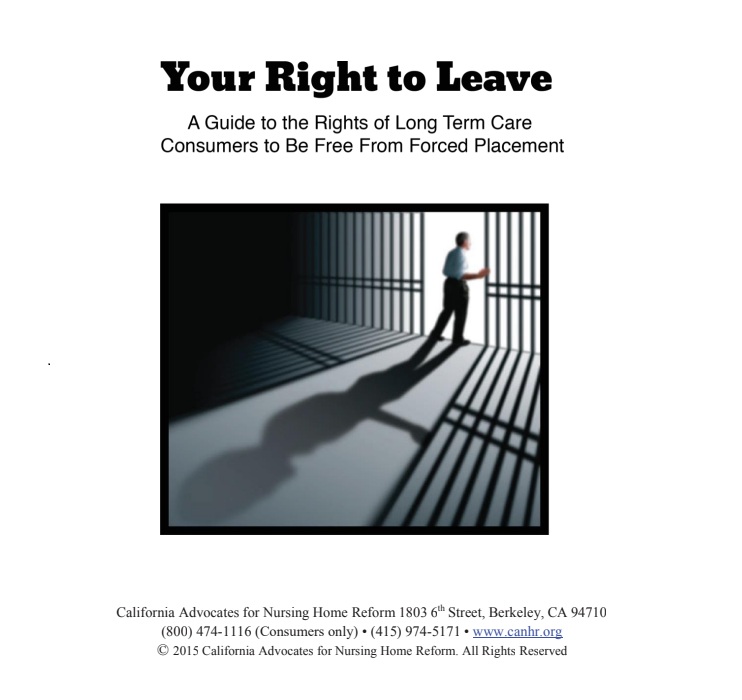
CANHR-300x283Is there any right more fundamental than the freedom to leave a place where you do not wish to stay? For nursing home residents in California, this right is often disregarded—sometimes in direct violation of the law. Fortunately, the California Advocates for Nursing Home Reform (CANHR) has recently updated its guide for long-term care residents who are being held against their will. This guide outlines the legal protections available and provides practical steps to challenge illegal restrictions on a resident’s right to leave.

The Right to Move Freely

Imagine you live independently in an apartment, making your own choices and living life on your own terms. One day, your landlord locks you inside, installs alarms on your doors and windows, and tells you that you’re not allowed to leave. He insists that, for your own safety, you must remain inside indefinitely. When you call the police for help, they tell you that your situation is a “civil matter” and that you need a court order to be able to leave.

Is malnutrition in an Orange County nursing home or assisted-living facility a result of nursing home neglect? The answer to this question is not always straightforward. Malnutrition can be difficult to identify, and in some cases, it can result from health issues that affect the resident. At the same time, malnutrition can be the result of elder abuse or neglect. Accordingly, it is important for anyone with a loved one in a nursing home or assisted living facility in California to understand the causes of malnutrition and common signs of malnutrition linked to elder abuse and neglect. An experienced Orange County nursing home neglect lawyer can provide you with more information, and we can speak with you today about taking action if an elderly loved one has experienced harmful malnutrition in a Southern California facility.

Learning More About Malnutrition

What is malnutrition? According to the World Health Organization (WHO), malnutrition is a term that “refers to deficiencies, excesses, or imbalances in a person’s intake of energy or nutrients.” It can take different forms, including the form known as “undernutrition,” which tends to result in the most harm for elderly Americans. Undernutrition can involve wasting, being underweight, and having important micronutrient deficiencies or insufficiencies. While malnutrition can affect people worldwide of any age, it tends to have the most significant impact among older adults in the US. 

When a resident falls at a nursing home or assisted-living facility in Los Angeles County, who is accountable? And, perhaps more importantly, who is liable if the fallen resident does not receive quick and effective assistance, ultimately resulting in their injuries worsening? According to a recent report in The Washington Post, new data suggests that employees at nursing homes and assisted-living facilities across the country often refuse to lift residents who have fallen to avoid liability, instead calling emergency medical responders to lift the resident. By the time an emergency medical responder arrives, injuries from the fall may have worsened.

From liability to initial falls in nursing homes and assisted-living facilities to injuries worsened by a lack of quick response time, it is important to know that the facility itself could be accountable. Our Los Angeles County nursing home neglect lawyers can tell you more.

Fall Hazards in Nursing Homes and Assisted-Living Facilities

Residents in Los Angeles County nursing homes and assisted-living facilities should never have to worry about getting hurt because of acts of violence perpetrated by staff members or fellow residents. However, as a recent study discussed in The New York Times reveals, violence is much more common than many people suspect, and it is certainly not an uncommon occurrence. When violence occurs in a Los Angeles County nursing home or assisted living facility and a resident is injured, it is important to seek legal advice. The facility itself may be liable since it has a duty of care to residents. Our experienced Los Angeles County nursing home abuse and neglect lawyers can tell you more and can assist you if you have concerns about an elderly loved one.

Violence and Injuries Caused by Other Residents

Often, when we think about nursing home abuse or neglect and injuries resulting from it, we think about injuries caused by the intentional or negligent behavior of a staff member or employee at a nursing home. Yet, as the article in The New York Times underscores, violence caused by other residents is actually extremely common. The article explains that, in nursing homes, assisted-living facilities, and other types of “long-term care facilities, residents sometimes yell at or threaten one another, lob insults, invade fellow residents’ personal or living space, rummage through others’ possessions and take them,” and “they can swat or kick or push.”

Elder abuse and neglect in Orange County often result in severe and deadly resident injuries in nursing homes. Abuse can take many different forms, from intentional physical, emotional, or sexual abuse to passive neglect. To be clear, even when a staff member or other employee of a nursing home does not intend to cause harm, failing to attend to a resident’s health needs can result in serious harm for which the facility can be liable. Likewise, injuries resulting from intentional harm can also result in successful nursing home abuse and neglect claims against the facility, as well as the perpetrators. While studies underscore that nursing home abuse and neglect injuries occur with some frequency, they also highlight that abuse and neglect often go unreported.

To be sure, some studies suggest that the underreporting of nursing home abuse and neglect means that rates of harm are significantly higher than data currently indicate. Why is nursing home abuse and neglect underreported? There are many potential reasons that various studies have addressed, but a new study conducted by researchers at the University of Connecticut argues that fears of retaliation are central to understanding the problem. What do you need to know? Our Orange County nursing home negligence lawyers can say more.

Common Reasons for Abuse and Neglect Underreporting in Southern California Nursing Homes and Assisted-Living Facilities

From nursing homes in San Diego County to those elsewhere in Southern California and across the country, staffing shortages can lead to serious resident injuries as a result of passive neglect. In short, when a nursing home does not have a sufficient number of employees to provide appropriate care for residents based on individual resident needs, residents can sustain injuries like bed sores because they are not moving or broken bones in falls when they try to get out of bed or make it to the restroom themselves despite requiring assistance with these activities. According to a recent article in The New York Times, the significant staffing shortages that were identified at the peak of the COVID-19 pandemic are persisting in nursing homes throughout the United States, along with problems concerning infection control measures and protocol.

Staffing Problems Could Be “Monumental”

A new report on nursing home safety, discussed by the Times, was recently prepared by the inspector general’s office at the US Department of Health and Human Services (HHS). The report cited how the federal Centers for Medicare & Medicaid Services (CMS) is responsible for overseeing about 1.2 million nursing home residents nationwide, and for many of those residents at facilities in California and elsewhere, staffing issues are “monumental.” To be sure, the report identified “high levels of burnout, frequent employee turnover, and the burdens of constantly training new employees, some of whom fail to show up for their first day of work.”

Contact Information