Articles Posted in Bed Sores

bedsore-300x200Pressure ulcers, commonly known as bedsores, are a silent epidemic sweeping through California’s nursing homes and assisted living facilities. These often-preventable wounds, which range from mild skin discoloration to deep, bone-exposing craters, are not merely an inconvenience; they are a sign of neglect, a source of immense pain, and a significant threat to the health and dignity of our most vulnerable seniors. At Nursing Home Law Group, we’ve witnessed firsthand the devastating impact of bedsores, representing over 100 clients whose lives have been irrevocably altered by these preventable injuries. Our California bed sore lawyers are always available to discuss your case.

What are Pressure Ulcers and Why Are They So Prevalent?

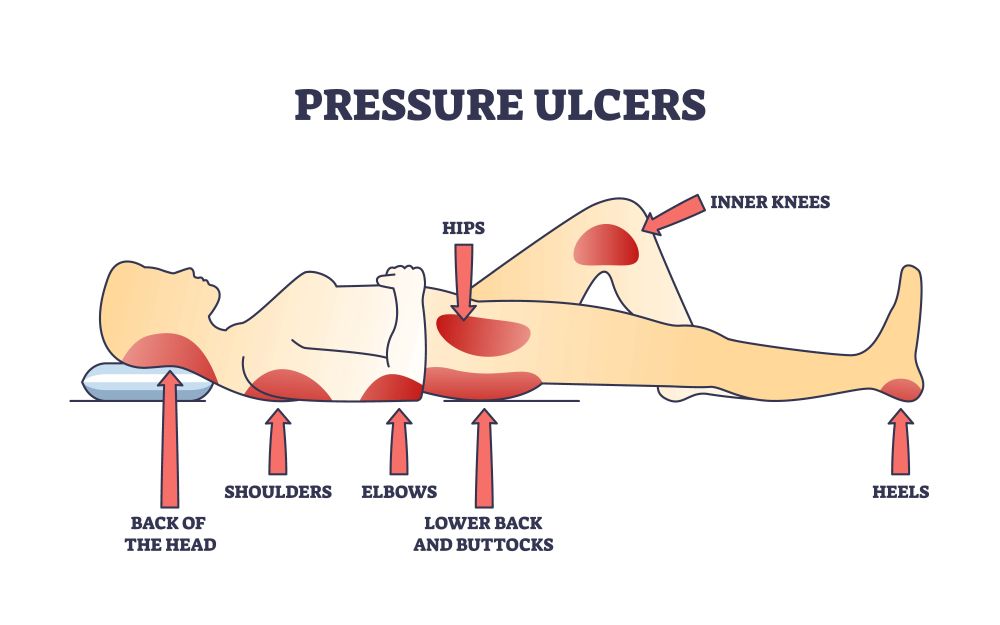
Pressure ulcers are localized injuries to the skin and underlying tissue, usually over a bony prominence, resulting from sustained pressure, or pressure in combination with shear or friction. In simpler terms, when an individual remains in one position for too long, the constant pressure restricts blood flow to that area. Without adequate blood flow, the tissue begins to die, leading to the formation of a sore.

IMG_29490008-300x227When a loved one is injured or declines unexpectedly in a nursing home or assisted living facility, families in Riverside County often feel caught off guard. Many facilities are located far from hospitals, understaffed, or operated by large corporate chains that prioritize occupancy over care. Knowing how to find a qualified nursing home neglect lawyer in Riverside County can make the difference between unanswered questions and real accountability.

Why nursing home neglect cases in Riverside County require careful legal selection

Riverside County has one of the fastest growing senior populations in Southern California. With that growth has come a rapid expansion of skilled nursing facilities and assisted living communities, many of which operate with thin staffing margins. Neglect cases frequently involve preventable falls, pressure ulcers, dehydration, medication mismanagement, and delayed responses to medical emergencies.

Do you have an elderly parent or other family member who currently resides in a nursing home in Northern California? Whether your loved one is living in Marin, Sonoma, or San Francisco County, it is important to be aware of bed sore risks and to take immediate action if you learn that your loved one has developed bed sores in the facility where they are supposed to be receiving a high quality of care. To be clear, bed sores — also known as pressure ulcers — can develop very quickly, and Stage 1 bed sores may not always be avoidable depending on an older adult’s health circumstances. Stage 1 bed sores can be effectively treated, and these have not yet developed into an open wound. However, when early bed sores are not quickly identified and treated, they can result in severe infections and even death.

A recent study in the Geriatric Medicine Journal addresses the link between bed sores and mortality, reporting that “older adults with pressure ulcers face a significantly higher risk of mortality compared to those without these injuries.”

Details of the New Elderly Bed Sore Study

Bedsores-300x188When a loved one develops a large, painful bed sore in a nursing home, it is almost always a sign that something went terribly wrong. Families often feel a mix of anger, guilt, and confusion — and they want to know one thing: Can I sue a nursing home in California for allowing this to happen? The answer is yes. Under California law, bed sores are a preventable medical condition, and when they occur, they often indicate neglect.

Below is a clear, compassionate explanation of your rights and what to do next.

What a Bed Sore Really Means in a Nursing Home

If you have an elderly loved one living in a nursing home anywhere in the San Francisco Bay Area, it is essential to understand the very real risks of injury that residents face and the warning signs that something may be wrong. Families often assume that harm only occurs when abuse is intentional. In reality, many of the most serious injuries in Bay Area nursing homes result from neglect, understaffing, and systemic failures rather than deliberate misconduct. One of the clearest and most dangerous examples is the development of bed sores, also known as pressure ulcers.

Bed sores are not an inevitable part of aging. They are widely recognized as a preventable condition when proper care is provided. Yet they continue to occur in nursing homes throughout San Francisco, Oakland, San Jose, and surrounding Bay Area communities. When they do, nursing homes may be legally responsible, even if no one intended to cause harm.

What Are Bed Sores and Why Are They Dangerous?

At California Nursing Home Law Group, we have years of experience handling a wide range of nursing home and assisted living neglect cases. We have seen the devastating effects that negligence can have on some of the most vulnerable members of society—those entrusted to nursing homes for care and safety.

While nursing home neglect can take many forms, there are five specific types of cases that we most commonly encounter. These include bed sore cases, falls with injuries, failure to take action after an obvious change in health condition, wandering away from the facility, and physical assault. Below is a breakdown of each type of case and the troubling signs associated with nursing home neglect.

  1. Bed Sore Cases

If you have an elderly loved one in a nursing home or assisted living facility in Los Angeles County, you might have learned at some point that your loved one developed a bed sore. When bed sores are identified very early on, they are treatable and do not often have long-term or severe consequences. However, when bed sores are not properly identified and treated, they can become so serious that they can actually result in life-threatening medical emergencies. You might be wondering: is the presence of a bed sore always a sign of nursing home neglect or abuse, or are there situations in which a relatively minor bed sore can occur and be treated without the presence of abuse or neglect? And are all serious bed sores the result of abuse or neglect? These are critical questions to consider, and our Los Angeles County nursing home neglect lawyers are here to help.

Understanding Bed Sores

In order to understand when bed sores can be a result of nursing home neglect or abuse, it is essential to be clear about what bed sores are and how they form. According to the Cleveland Clinic, bed sores are, quite simply, “wounds that occur from prolonged pressure on your skin.” They occur most frequently among “people who are immobile for long periods, such as those who are bedridden or use a wheelchair.” They can be extremely painful and can result in significant and life-threatening infections if untreated. Bed sores are staged according to severity, with Stage 1 bed sores being the least severe and Stage 4 bed sores being the most severe.

As a law firm who specializes in the abuse and neglect of seniors, it’s important to stay informed about cases involving elder abuse. Unfortunately, these cases occur far too often, and can take many forms, including physical abuse, emotional abuse, and neglect. Neglect, in particular, is a type of elder abuse that can be difficult to detect, but can have devastating consequences.

Recently, a registered nurse who worked at a Riverside assisted living facility was charged with abuse by neglect of a 69-year-old woman who died after she developed gangrene. Emily Jones, 40, of Riverside, has pleaded not guilty to elder abuse that caused great bodily injury and remains free on $50,000 bail.

According to prosecutors, Jones was a case manager for a resident at Brookdale Senior Living in 2017 when she failed to properly assess an ulcer on the woman’s right heel. As a result, a Plan of Care was never developed, and the ulcer worsened into a wound that required the resident to undergo emergency surgery to her right foot, which had become septic and gangrenous. Jones also failed to notify a doctor and the woman’s family that her health was declining as a result of the lack of care, and she eventually died.

Walton Law Firm represented the interests of the family of M.E. (confidential), and elderly woman who suffered from dementia and needed the help with her activities of daily living. She was admitted to a small 12-bed San Diego area assisted living facility in April of 2017. Upon admission, M.E. did not have any bedsores.

M.E’s children began to notice that their mother was never out of her bed when they would visit (which was often). Worse, the family would find M.E. alone in her room with all of the lights turned out, even in the middle of the day. The facility’s administrator first lied to the family, telling the children that their mother was helped out of bed every day. Later, she testified in a deposition that M.E. had experienced a “health crisis” during that time frame and needed to stay in bed (even though the family was unaware of any crisis).

As a result of being left in bed, M.E. developed a bedsore on her coccyx. Within a month, the sore was sized as a Stage III, which disqualified M.E. for assisted living care, and required the facility to discharge her or contact the state for permission to retain her with proper care. Instead of taking action, the administrator actively discouraged the family from taking appropriate action with regard to their mother’s health.

Walton Law Firm recently settled the case of A.Q., a 78-year-old woman who died tragically after acquiring multiple bedsores that developed and worsened while she was under the care and treatment of a San Diego home health care agency.  Ms. Q was survived by her three children who brought a legal action for both wrongful death and elder abuse and neglect, contending that the result of careless and reckless conduct committed by a license vocational nurse (LVN) who ignored the development and worsening of Ms. Q’s wounds, and failed to notify a physician of the severity of the wounds or make a request for Ms. Q to be sent to the hospital.

Walton Law Firm initially argued that the pressure sores suffered by Ms. Q were the result of negligence, and that such negligence was a substantial factor in her premature death. The home health provider, it was argued, failed Ms. Q when it 1.) failed to obtain an air mattress for Ms. Q as requested by caregivers, 2.) failed to obtain additional nursing care for her when it was obviously needed, 3.) failed to have Ms. Q seen by a registered nurse or mobile physician, and 4.) failing to have Ms. Q transferred to a hospital where she so obviously need to go. 

In addition, Mr. Walton also contended that the treatment of Ms. Q was so egregious, that it rose to the level of elder neglect under California law. In order to show neglect, Ms. Q (through Walton Law Firm) had to show that the home health agency either failed to use the degree of care a reasonable person would have and/or failed to protect Ms. Q from health and safety hazards.  It has had to show these failures were done with the conscious disregard for the rights and safety of Mr. Q.

Contact Information